What Happens When You Cannot Find a Hospital in an Emergency
Published 29 June 2026
Anthony Joshua's car crash exposed Nigeria's emergency care gap when no ambulance arrived. Here is what the three delays model teaches about surviving a medical emergency in Nigeria.
What Anthony Joshua's Accident Revealed About Emergency Care in Nigeria
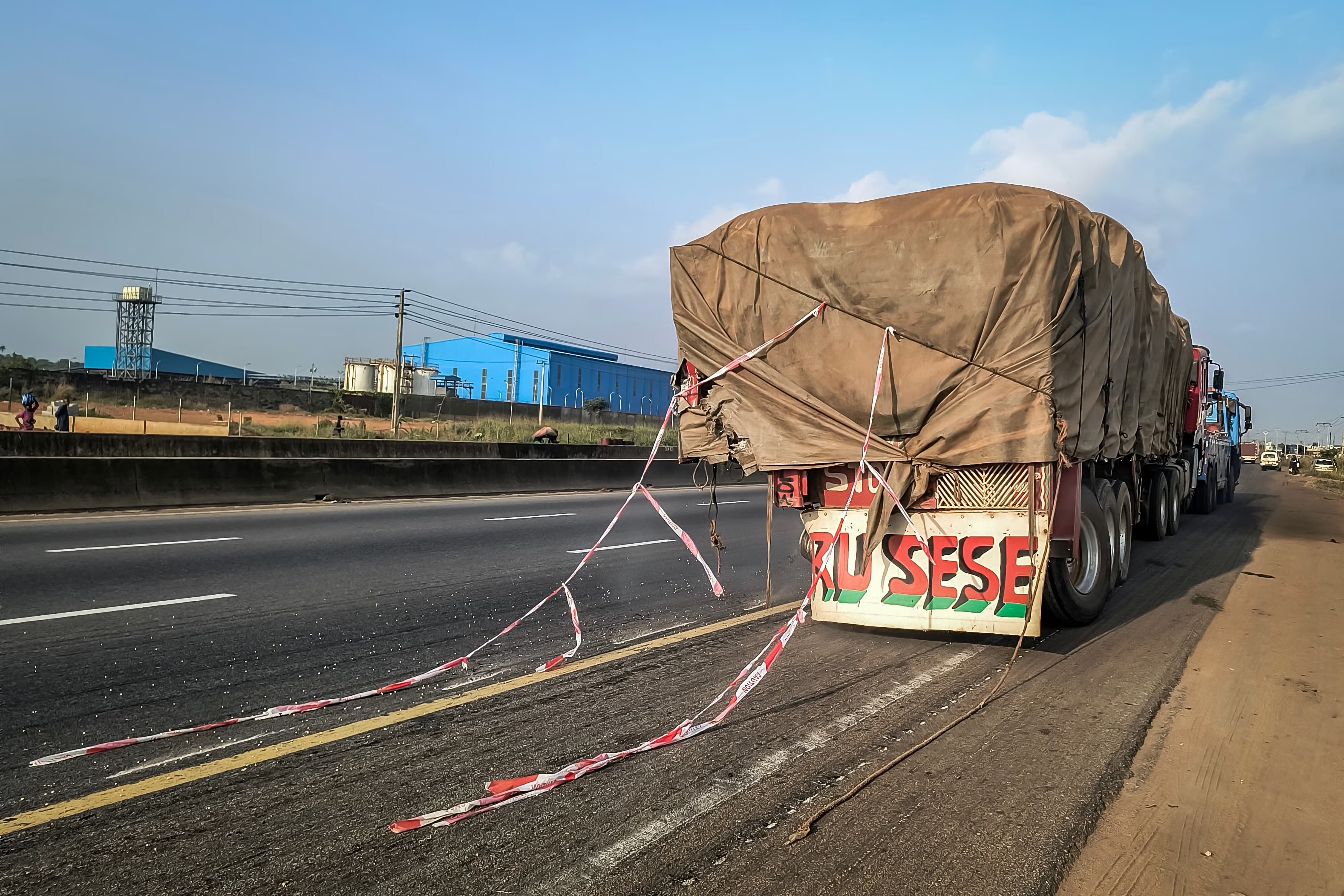
In late December 2025, boxer Anthony Joshua was involved in a car crash along the Lagos-Ibadan Expressway near the Sagamu Interchange. His vehicle suffered a tyre burst and collided with a stationary truck. Two of his close associates, Sina Ghami and Kevin Latif Ayodele, died at the scene. Joshua survived, but what happened in the minutes after the crash became almost as widely discussed as the accident itself. No ambulance arrived. No trained paramedics appeared. Bystanders and police officers without medical training tried to help, and Joshua was eventually moved to a hospital sitting upright in the front seat of a police patrol vehicle, a position that can worsen a spinal injury if one is present.
Dr Babajide Saheed, Chairman of the Nigerian Medical Association in Lagos, did not soften his response when asked about it. "It shows that we don't have emergency services at all," he told Punch Healthwise. "We have a very poor emergency service, both outside the hospital and within the hospital. There are human resources available, but the necessary tools needed are absent."
This was not a story about a celebrity getting unlucky. It was a story about what happens to every Nigerian, famous or not, when an emergency hospital in Nigeria cannot be found, reached, or relied on in time. If a globally recognised athlete with security personnel and resources could not get an ambulance to the scene of his own accident, the odds for an ordinary person on that same road are worse.
The Three Delays That Decide Who Survives an Emergency
Public health researchers use a framework called the three delays model to explain why people die from conditions that should have been survivable. It was originally developed to study maternal deaths, but it applies just as cleanly to road accidents, cardiac events, and any other medical emergency in Nigeria today. Each delay compounds the one before it, and in Nigeria, all three tend to happen at once.
Delay one: deciding what to do
The first delay happens before anyone even picks up a phone. There is no single, reliable, universally known emergency number in Nigeria that connects a caller to an ambulance the way 911 does in the United States or 999 does in the United Kingdom. Without that, people default to calling family members, flagging down passing vehicles, or simply not knowing who to contact at all. Earlier survey data on emergency response in Nigeria found that the vast majority of people call family or arrange their own transport rather than call an emergency number first, simply because they are not confident an emergency number will actually work.
Delay two: reaching a hospital
Even once a decision is made, getting to a hospital is its own battle. Nigeria has an estimated 0.4 ambulances per 100,000 people, far below World Health Organisation standards, and only about 151 functional Federal Road Safety Corps ambulances exist nationwide to cover the entire country's road network. As a result, only around 5% of trauma victims in Nigeria reach a hospital by ambulance. Everyone else relies on private cars, taxis, motorcycles, or police vehicles with no stabilisation equipment on board.
Lagos has made some progress here. The Lagos State Ambulance Service operates five ambulance bases and recently introduced ten ambulance bikes specifically to navigate traffic-choked roads faster than a standard ambulance can. Kano launched its own state emergency medical service in early 2026 with 20 to 25 ambulances. But these efforts remain small relative to the population they are meant to serve, and in many states, including Kaduna, Enugu, Ondo, and Osun, ambulance density and rural coverage remain critically thin.
Delay three: getting treated once you arrive
Reaching a hospital is not the same as receiving care. A 2025 narrative review of emergency medicine in Nigeria found that in some cases, more than half of patients arriving at major urban emergency departments were already dead on arrival or died within six hours, often because the facility lacked trauma-specific resources, functioning equipment, or sufficient staff. The Second Vice President of the National Association of Resident Doctors, Dr Kwarshak Kevin Yakubu, has pointed to a doctor shortage ratio in emergency units of roughly one doctor for every 1,900 patients in some facilities, a level of strain that makes fast, attentive emergency treatment nearly impossible even when a patient does make it through the door.
A 2025 assessment by SBM Intelligence found that not a single Nigerian state scored above 30% on a health preparedness index. Nigeria's 2026 national health budget allocates less than 5% of total government spending to health, far below the 15% benchmark Nigeria itself committed to under the 2001 Abuja Declaration. Underfunding at the policy level becomes understaffed, underequipped emergency rooms at the hospital level.
Why This Keeps Happening the Same Way
Every major accident in Nigeria seems to surface the same gaps. Survivors of a bus accident on the Lagos-Ibadan Expressway in early 2026 described calling an ambulance line repeatedly, only for it to go straight to voicemail, until a nearby soldier's camp ended up transporting the injured in a military vehicle over rough roads. A road traffic incident in Abuja in 2025 ended with several hospitals reportedly refusing to treat a victim before he died, a pattern of refusal that has long plagued Nigeria's emergency care system despite a directive that trauma and gunshot victims should be treated immediately, before any conversation about payment or police reports.
The Federal Road Safety Corps emphasises what responders call the golden hour, the first 60 minutes after a traumatic injury, as the period that most often determines whether a patient survives. Delays during that hour, whether in deciding what to do, getting to a hospital, or receiving treatment once there, frequently turn survivable injuries into fatal ones through complications like internal bleeding or shock. Nigeria's emergency response system loses that golden hour again and again, not because the country lacks doctors or hospitals entirely, but because the system connecting a person in crisis to the nearest capable facility barely exists.
What You Can Do Before You Are the One in Crisis
You cannot personally fix Nigeria's ambulance shortage or fund a national emergency number. But you can remove delay one from your own situation, and that is the delay most within your control.
Know, in advance, which hospitals near your home, workplace, and the routes you travel regularly have functioning emergency units. Do not wait until you are bleeding on the side of the Lagos-Ibadan Expressway to start searching. Save the direct contact information for at least two or three hospitals near the places you spend the most time. If you have NHIA insurance, know which of those facilities are accredited so you are not forced into an impossible decision about cost while someone is in pain.
If you are a Good Samaritan responding to someone else's emergency, remember the advice repeated by Lagos NMA chairman Dr Babajide Saheed after the Joshua accident: do not move a victim who may have a spinal injury. Let them lie flat and wait for trained help where possible, rather than sitting them upright or dragging them, however well-intentioned the instinct to help quickly might be.
How Medicall Helps You Remove the First Delay
The three delays model shows that the first failure point, simply not knowing where to go or who to call, is the one piece of the emergency chain that a directory like Medicall can directly solve. We help you identify verified hospitals and clinics near any location in Nigeria before you need them, so that when an emergency happens, you are not starting your search for an emergency hospital in Nigeria from zero.
Search ahead of time for facilities near your home, your office, and the roads you travel most. Know which ones accept your insurance and which have the emergency capacity you might need. The system around you may still be under-resourced, but you do not have to face that system uninformed.
Find verified hospitals with emergency care near you on Medicall.
Frequently Asked Questions
What is the emergency number for ambulances in Nigeria?
Nigeria does not have one single, universally reliable emergency number the way countries like the UK or US do. Some states, including Lagos, operate their own ambulance service lines, but coverage and reliability vary widely. Because of this, it is important to save the direct contact numbers of hospitals and ambulance services near you in advance rather than relying on a national number you may not be able to reach in a crisis.
How many ambulances does Nigeria have?
Nigeria has an estimated 0.4 ambulances per 100,000 people, well below World Health Organisation recommendations. Nationally, there are only about 151 functional Federal Road Safety Corps ambulances to cover the entire road network, which is why only an estimated 5% of trauma victims reach hospitals by ambulance.
What is the golden hour in emergency medicine?
The golden hour refers to the first 60 minutes after a traumatic injury, which medical responders consider the most critical window for preventing death or severe long-term complications. Delays in deciding to seek help, reaching a hospital, or receiving treatment once there can each eat into this window and significantly worsen outcomes.
Can a Nigerian hospital legally refuse to treat an accident victim?
No. Nigeria's health authorities have directed that victims of trauma, gunshot wounds, and accidents should be treated immediately by a health facility before any discussion of payment or a police report. In practice, reports of hospitals refusing or delaying treatment still occur, which is part of why knowing in advance which nearby facilities have functioning emergency capacity matters.
How can I prepare for a medical emergency in Nigeria before it happens?
Identify hospitals with functioning emergency units near your home, workplace, and regular travel routes before you need one. Save their direct contact details, confirm whether they accept your health insurance, and use a verified directory like Medicall to check this information in advance rather than searching for it during a crisis.