How to Find a Verified Hospital Near You in Nigeria
Published 27 June 2026
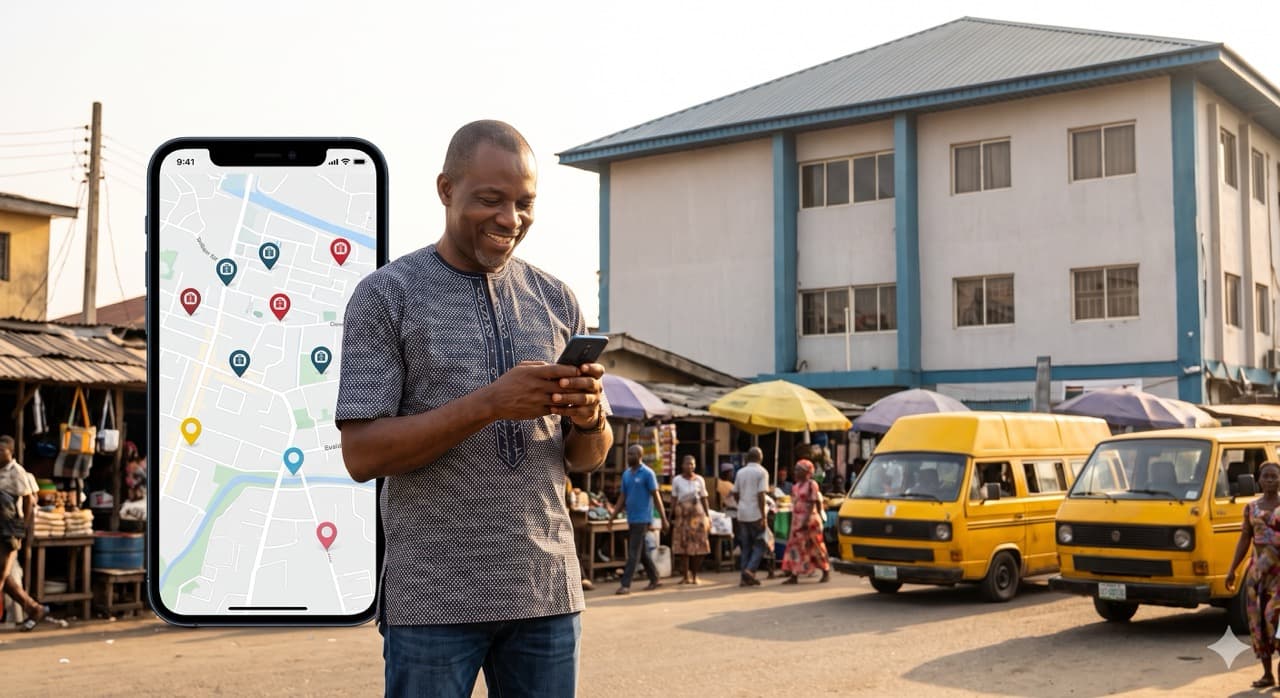
Nigeria has roughly 40,000 hospitals and clinics, but most are invisible online. Here is how to find a verified hospital near you, why it matters, and what to check before you visit.
Nigeria Has 40,000 Hospitals. So Why Is It So Hard to Find One?
If you have ever searched "find hospital near me" in Nigeria and ended up scrolling through outdated Google results, incomplete directories, or facilities you have never heard of, you are not alone. Nigeria has roughly 40,000 functional hospitals and clinics registered with the Federal Ministry of Health. That sounds like a lot. But for a country of over 230 million people, it works out to about one facility for every 5,475 Nigerians. And the real problem is not just the number of facilities. It is that most of them are nearly impossible to find, verify, or trust when you actually need care.
In February 2026, the Healthcare Federation of Nigeria warned that the country's healthcare system cannot survive without full integration of the private sector and better technology infrastructure. That warning was not about building more hospitals. It was about making the ones that exist findable, accessible, and accountable to the patients they serve.
This guide breaks down why finding a hospital in Nigeria is so difficult, what risks you face when you walk into an unverified facility, and how to protect yourself and your family by checking the right things before every visit.
Why Most Nigerian Hospitals Are Invisible Online
About 107 million Nigerians are now online, and Google handles roughly 98.7% of all searches in the country. When someone in Lagos, Abuja, or Port Harcourt needs a hospital, their first instinct is to search for one on their phone. That is normal behaviour in 2026.
The problem is that most hospitals are not where Nigerians are looking. Fewer than 18% of Nigerian hospitals use electronic medical records, and the vast majority have no website, no updated Google Business Profile, and no reliable online listing. The government's official Nigeria Health Facility Registry at hfr.health.gov.ng does list facilities across all 36 states and the FCT, but the contact fields for phone numbers, emails, and websites are frequently blank. It is a data infrastructure built for administrators, not for a patient in pain at 2am trying to figure out where to go.
This means there is a massive gap between where Nigerians search for hospitals and where hospitals actually show up. The search intent exists. The supply of information does not.
The Three Barriers Standing Between You and the Right Hospital
Finding a hospital in Nigeria is not just about knowing a name. Three barriers stack on top of each other and make the problem worse.
Distance and transport cost
Healthcare facilities in Nigeria are unevenly distributed. The south-east has 5.4 secondary facilities per 100,000 people. The north-west has just 0.45 per 100,000. That is a more than tenfold gap. Even within cities, the nearest hospital might not offer the service you need, and the one that does might be across town with no affordable transport to get there.
A 2025 study of 357 pregnant women across three local government areas in Oyo State found that 72% cited transport cost as a barrier to reaching healthcare. That is not a rural problem. It is a systemic one. And it gets worse at night, when commercial transport is limited and emergency services barely exist. A 2019 survey found that only 3% of Nigerians call an emergency number first during a medical crisis. The other 78% call family members or arrange their own transport.
Information gaps
Even if distance is not the issue, information often is. Which hospitals near you accept NHIA insurance? Which ones have a functional emergency unit? Which ones have the specialist you need? Most patients cannot answer these questions before they leave home. They find out the hard way, by showing up and being told to go somewhere else.
Over 60% of patients bypass primary healthcare centres entirely and self-refer to overcrowded tertiary hospitals, partly because they do not know what services are available closer to them. Nigeria's hospital bed capacity sits at 0.9 beds per 1,000 people, well below the global average of 2.3. So those tertiary hospitals are already full, and patients who did not need to be there are competing for space with those who do.
Verification and trust
This is the most dangerous barrier. When you cannot verify a facility before you visit, you are gambling with your health. And in Nigeria, that gamble has real consequences.
The Quack Clinic Problem Is Worse Than You Think
In October 2025, the Lagos State Health Facility Monitoring and Accreditation Agency (HEFAMAA) confirmed that it had sealed 30 health facilities over the preceding year. The reasons included operating without state registration and using unqualified personnel to treat patients. HEFAMAA now requires accredited facilities to display QR codes that patients can scan to confirm the facility's status, but most Nigerians do not know this system exists.
In Abuja, the story is similar. In April 2025, FCT Minister Nyesom Wike ordered a crackdown on unlicensed hospitals after a 35-year-old pregnant woman died following a caesarean section at an unregistered facility in Durumi. The hospital was not on any official registry. It had no accreditation. And the patient had no way to know that before she walked through the door.
These are not isolated cases. Across Nigeria, fake doctors, unlicensed clinics, and facilities operating without qualified staff continue to put lives at risk. The Medical and Dental Council of Nigeria maintains a register of licensed practitioners, and civic tools like the "Dodgy Doctors" platform let citizens cross-check a practitioner's name against it. But these tools are fragmented, hard to find, and not built into the experience of searching for a hospital.
What You Should Check Before Visiting Any Hospital in Nigeria
Whether you are choosing a hospital for a routine check-up, a pregnancy, or an emergency, these checks can protect you and your family.
Check the facility's registration status
Every legitimate hospital in Nigeria should be registered with its state government's health regulatory body. In Lagos, that is HEFAMAA. In the FCT, facilities must be registered with the FCT Health and Human Services Secretariat. Ask to see the facility's registration certificate, or scan the QR code if one is displayed. If the facility cannot prove its registration, do not stay.
Verify the doctors
Every practising doctor in Nigeria must be registered with the Medical and Dental Council of Nigeria (MDCN). You can verify a doctor's registration status through the MDCN's online portal. If you cannot find them in the database, that is a red flag. Nigeria has roughly 55,000 actively practising doctors for over 230 million people, giving the country a doctor-to-patient ratio of approximately 1 to 4,000. With numbers that thin, the doctors who are here need to be real.
Confirm NHIA accreditation if you have insurance
If you are enrolled in the National Health Insurance Authority scheme, whether through your employer, GIFSHIP, or a state programme like Lagos's Ilera Eko, you can only claim coverage at NHIA-accredited facilities. Visiting a non-accredited hospital means paying entirely out of pocket. Before you go, confirm that the hospital is on the NHIA's list of accredited providers.
Ask about emergency capacity
Not every hospital can handle emergencies. Before you need one, find out which facilities near you have a functional emergency unit, blood bank, and referral capability. In many Nigerian hospitals, emergency capabilities are not publicised, and critical access phone numbers work inconsistently. Knowing this in advance can save critical time when minutes matter.
Use a verified healthcare directory
Instead of scrolling through generic search results and hoping for the best, use a directory that verifies facilities before listing them. Medicall is building Nigeria's verified healthcare directory, connecting patients with hospitals, clinics, and specialists that have been checked for registration, accreditation, and service availability. You can search by location, specialty, and insurance acceptance to find the right facility before you leave home.
Why Nigeria Needs a Verified Healthcare Directory Now
The numbers paint a clear picture. Nigeria has 40,000 facilities but only one doctor for every 4,000 to 9,000 people, depending on the source. Over 70% of healthcare spending comes directly out of patients' pockets. The country loses an estimated $1 billion or more every year to medical tourism because patients do not trust local options or cannot find the right ones. And between January and September 2025, an estimated 20,811 maternal, neonatal, and under-five deaths were recorded across the country.
Behind every one of those statistics is a person who needed care and either could not find it, could not reach it, or ended up at the wrong place. That is not a medical problem. It is an information problem. And information problems have technology solutions.
The Healthcare Federation of Nigeria has called for technology integration as a matter of survival. The NHIA is pushing digital certificate verification. HEFAMAA is deploying QR codes. The building blocks are there. What is missing is a single, trusted, patient-facing platform that brings it all together and puts verified hospital information in the hands of the people who need it most.
That is what Medicall is for. Search for hospitals and clinics across Nigeria, filtered by location, specialty, and insurance acceptance. Every listed facility goes through a verification process so you can make informed decisions about your healthcare, not guesses.
Search for a verified hospital near you on Medicall.
Frequently Asked Questions
How do I find a hospital near me in Nigeria?
You can use Medicall's verified healthcare directory at usemedicall.com to search for hospitals and clinics by your location, the specialty you need, and whether the facility accepts your insurance. This saves you from relying on generic search results or word of mouth that may lead you to unverified facilities.
How can I check if a hospital in Nigeria is registered?
Every state has a health regulatory body that registers hospitals. In Lagos, it is HEFAMAA. In the FCT, it is the Health and Human Services Secretariat. You can also check the Federal Ministry of Health's Nigeria Health Facility Registry at hfr.health.gov.ng. Accredited facilities in Lagos now display QR codes you can scan to confirm their status.
How many hospitals are there in Nigeria?
The Federal Ministry of Health records approximately 40,000 functional hospitals and clinics across Nigeria's 36 states and the Federal Capital Territory. However, the majority are primary healthcare centres, and only about 20% of those are estimated to be fully functional with adequate staffing and equipment.
What should I do if I suspect a hospital is operating illegally?
Report the facility to your state's health regulatory agency. In Lagos, you can contact HEFAMAA directly. In the FCT, reports can be made to the Health and Human Services Secretariat. You can also verify individual doctors through the Medical and Dental Council of Nigeria's online register to confirm they are licensed to practise.
Can I use my NHIA health insurance at any hospital?
No. You can only claim NHIA coverage at hospitals that are accredited by the National Health Insurance Authority. If you visit a non-accredited facility, you will have to pay the full cost out of pocket. Always confirm a hospital's accreditation status before your visit, either through the NHIA or by using a verified directory like Medicall.